Showing posts with label Reviews. Show all posts

Sunday, January 3, 2010

2010 A.D.: Arturo vs. Doctor Who: The End Of Time!

SPOILERS AHEAD

Everybody knew The End Of Time was all about one thing: the final moments of David Tennant as The Tenth Doctor - a perfect 10, for this new (re)generation of Whovians. Much like Ten, it's hard to imagine many of us thought about a season where he wouldn't be guiding some well-meaning sap, and us, through time and space. Life After David? Even Inigo Montoya would have called it Inconceivable even a year ago.

But, again, much like this Doctor, we've had a teeth-gnashing few months to prepare for the inevitable. The end of his Song had been signed and sealed. All we could hope for was a fittingly grand delivery. And Tennant was more than up to the task. The problem was, show-runner Russell T. Davies - penning his own swansong as well as Tennant's - came up way too short in swinging for the fences one last time.

Most of the two hours preceding Tennant's final moments in the TARDIS revolved around The Doctor seemingly facing three different threats, but the sum of his three adversaries was decidedly less than each of the parts: The creepy neo-futurist Naismith family stuck out like Week 6 baddies in over their depth, solely introduced so they could introduce the latest thingaMacguffin. And for all the bluster and gravitas Timothy Dalton provided as Chancellor PalpatineLord President Rassilon, the emergence of a war-crazed, nihilistic batch of Time Lords was good for nothing more than a two-minute scare. After the events of The Stolen Earth, it was more surprising the average Londoner didn't see Gallifrey hovering above, shrug and huff off complaining about why it's always Saturday when the nutters come out.

In reality, the Doctor's last dance partner was, fittingly, John Simm's Master, resurrected by a horribly disposable set of worshippers as a binge-eating, energy-blasting cross between Goku and Agent Smith, particularly when he uses the Macguffin Ray to go John Malkovich across the whole planet.

"What would I be without you?" Ten asks the Master at one point, in one of the little moments they share just before each shuffles off. And it's in those moments where the story, such as it is, stops to breathe and feels more natural as a result. Those bits of humanity also resurface in the conversations between The Doctor and good old Wilfred Mott, where the Doc finally releases the guilt that's been building at least since The Waters Of Mars. He also tells Wilf, and us, why the thought of this death rattles him so, when it would likely lead to another Regeneration, anyway.

"Even if I change, it feels like dying," Ten sniffs, fighting his sadness and anger at once. "Everything I am dies. Some new man goes sauntering away. And I'm dead." When the mysterious Four Knocks signalling his death finally come, at the hands of a trapped Wilf, the Doctor actually hesitates before coming to the rescue, complaining, "I can do SO MUCH MORE!"

And it's those moments which finally set up the end of his road, making the rest of the story's misfires and unanswered questions - who was the woman coming to Wilfred? Where did the Master and the Time Lords end up? How could Donna's mental block survive this whole thing? etc. - tolerable, if nothing else.

Because for all that went wrong with this story, and with this Doctor, the heart just kept shining through. This Doctor loved life seemingly more than all his other incarnations, making his final few words truly heart-breaking. But time must move on, even if Time Lords don't, and here comes a new era, bounding in with big hair, a burning TARDIS and a "GERONIMO!" ...

Wednesday, November 18, 2009

Turn Wrong: Arturo vs. Doctor Who: The Waters Of Mars!


SPOILERS AHEAD AND IN THE LINKS POSTED HERE

There's a moment in "The Waters Of Mars" where we see The Tenth Doctor doing his ... well, his Thing: working another last-ditch plan that he knows is going to save everyone, and you know it's going to save everyone, and so does the person he's rescuing.

But what makes this episode work is that, even as we see the Doc at his most life-affirming, his most ambitious moment yet, both you and the rescuee - in this case, the formidable Capt. Adelaide Brooke - know that he is absolutely wrong.

As we learn nearly immediately upon Ten's arrival on the Red Planet, the case of Capt. Brooke and her crew represents, like Pompeii did, a "fixed point" in time, which has come to be short-hand for an awful thing that Must Happen. Brooke's death, he confesses, is the impetus for all tomorrow's star treks: "Your death creates history," he tells Adelaide, who must realize she spent her whole life building up to its' end.

Once again, The Doctor isn't there to save anyone, merely to bear witness. And this time, the Doctor - a truly Lonely God, without a Companion to buoy him or his fellow Time Lords to rein him in - cracks. Seemingly on the side of good, initially, as he gets Adelaide and some of her staff out of harm's way, but the slope is already slippery; as she chides him for breaking his own rules, his only response is a raised eyebrow and one word: "Tough."

If all this sounds like it's ignoring the baddie of the week or the rest of Adelaide's crook, well, it kinda is. They're not bad, as "mid-season" episode groups of characters go - the unnamed lifeform that picks off the crew is clever enough to up the ante as need be - but the episode turns on the final 10 minutes, when Ten goes off the rails and realizes it too late. The Cloister Bell is tolling for him. And this time, both he and you know the end is coming.


Top image courtesy of oneGemini Studios

Saturday, August 15, 2009

Shrimpin' Ain't Easy: Arturo vs. District 9!

The much ballyhooed District 9 succeeds at one thing – it leaves you with questions. The problem is, not all of them are of the good kind.

The film's conceit – sticking a million-plus misplaced extraterrestrials in the middle of Johannesburg – is promising. But from there, the story is built on a series of cheats, the biggest one being the rather loud absence of the word that, like it or not, comes to mind once you set the story in South Africa: Apartheid.

SPOILERS AHEAD

It's implied that the District is a stand-in for the Soweto of our own reality. But, again, that's a cheat: we're robbed of a potentially more potent commentary because of that substitution. Getting viewers to say, “Wow, humans are capable of great inhumanity” isn't as ground-breaking as co-writer and director Neill Blomkamp might want to think. And to think that any government would be handling a First Contact situation (as opposed to the internment of its' own citizens) without the U.S., United Nations or any other coalition tugging at its' sleeve isn't sci-fi – it's flat-out ridiculous.

The story kicks off 28 years after the visitors' arrival on Earth, but it's not really about them – our protagonist, and literal tour guide is well-meaning office schmuck Wilkus Van Der Merwe (Sharlto Copley), a Christopher Guest character in way, way, way over his head. Wilkus is placed in charge of serving eviction notices to the District's residents and selling them on the new FEMA government housing they're getting shipped to.

While investigating a squatter's shack, Wilkus is sprayed with some of “the fluid,” a crucial biological material. Not only does it power the aliens' rather impressive weaponry, but it's the key to the escape plan of one Christopher Johnson, as a singularly clever Prawn is dubbed. Christopher has been plotting for 20 years to get the hell off this planet, and needs the juice to power his getaway craft and revive his people's mothership, still hovering over Johannesburg.

It's worth noting that Copley co-produced the inspiration for District 9, Alive In Joburg, a short film where the aliens get a fairer shake from Blomkamp; one of them gets to talk directly to the unseen documentarians and express a motivation (they just want to get off this planet) and a problem (our atmosphere is toxic to their physiology). There was a similar scene in the trailer for District, but it's not in the theatrical cut, which makes Christopher's positioning as the Noble Other/Savage really troubling.

Why is Christopher so much smarter than his fellow refugees? How could he be the only one trying to find a way out, or to know/care enough to clothe himself in a “human” manner? And, if humans and Prawn are able to understand each other by the time the “footage” is released, why did the documentarians – because that's how the first half of this film is framed – exclude interviews with any of the aliens in favor of black South Africans telling us how threatened they feel, and white South Africans denigrating the species as a whole?

We get no insight into any of this, because the movie retreats, very jarringly, into the realm of summer schlock after Wilkus' infection. As he becomes a test subject, a fugitive, and a less-than-altruistic ally to Christopher, their characters run headlong into caricatures: a wheelchair-bound, voodoo-influenced Nigerian gangster exploiting the Prawns for cash and weapons while eating their body parts on the advice of a “priestess”; and a xenophobic mercenary charged with turning Wilkus in to his slimy CEO father-in-law.

Copley isn't bad at all – his Wilkus is a terrific anti-hero. But could Christopher and his son, both CGI characters who summon up more “humanity” than the real-life Shia LaBouf, really have been less palatable figures for the audience and creative team to rally behind? Because the story we get, with awesome-looking alien tech and a white hero standing up for the Oppressed, doesn't end up going anywhere Torchwood didn't just saunter through with more brains and less blood; at least Russell T. Davies would've given Christopher's race a name. By the time the film reaches its (open-ended) conclusion, you're left hoping the visitors would return for vengeance – so that you could root for them.

Sunday, August 9, 2009

Tonight, HOUR 42 goes Hollywood!

Tonight, @ThePeterPixie and I welcome our first guest with his own listing on IMDB - Ray Griggs, writer and director of the new independent superhero film, Super Capers! We'll talk to him about his experience so far as a relatively new filmmaker, and try to get a few good Adam West stories out of him.

Peter and I will also trade notes on G.I. Joe - what, you thought I'd let him get away without seeing it? Also:

* Just two weeks after San Diego, Chicago hosts its own comic-book convention - we'll bring you the highlights.
* We'll talk about some of the rather ... interesting creative choices that were published this week. Bottle of grappa, anyone?
* Plus YOUR comments and questions at 646-716-4799

In the meantime, if you want to catch up on last week's show, which featured even more guest-stars, just click on the handy-dandy player below - then come on back and join us at 7pm PST (10p EST) tonight for HOUR 42!

Friday, August 7, 2009

More 'Oh No' than 'Yo Joe': Arturo vs. G.I. Joe: The Rise Of Cobra

The most surprising thing about G.I. Joe: The Rise Of Cobra? It could've been worse.

But make no mistake: if this film doesn't make a Lusitania out of what could've been a fun franchise,the first three elements to go from any sequels should be writers Stephen Beattie, David Elliot and Paul Lovett, with director Stephen Sommers not far behind.

At least the marketing team is in on the joke: using Kid Rock in the ad campaign is a warning that G.I. Joe is years behind its' time – it really belongs alongside Street Fighter and The Crow: City of Angels in a Rifftrax '90s Film Festival; why else would the first words we see on the screen be “In The Not-Too-Distant Future”?

HERE THERE BE SPOILERS

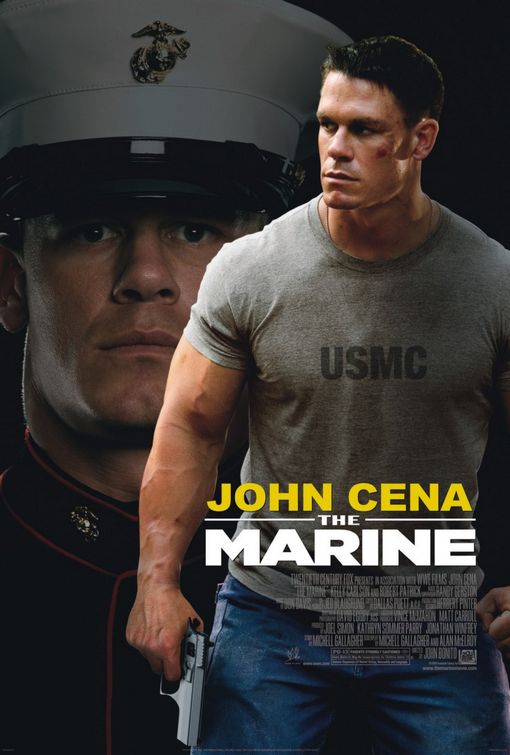
Like another bloated '80s revamp (to be named later) laced with bad CGI and no-dimensional heroes, Rise is crippled most by the attempt to “humanize” its' core characters. In this case, it's done through a romantic subplot between Duke and The Baroness. It doesn't help that, as an action hero, Channing Tatum makes John Cena look like The Rock. But the real disservice is done to the Baroness, who in Sienna Miller's hands goes from a magnificent '80s she-bastard to Girl Gone Mild-ly Bad - with a heart of gold, of course.

Other than the spayed Baroness, the villains in this film fare better than I'd expected. The flashback sequences used as backstory for the men who become Cobra Commander (Joseph Gordon-Levitt) and Destro (Christopher Eccleston) actually work, and both Eccleston and Gordon-Levitt manage to wring something out of their cartoonish inspirations. Gordon-Levitt, in fact, stole the film – petty larceny, I know, but a feat I'd expected out of Eccleston. JGL's voice-acting was the film's most pleasant surprise; it holds up admirably alongside Chris Latta's original work.

Unfortunately for the film, the Joes' characters – especially Dennis Quaid as General Hawk – fare as badly as the Cobras' do well. The Army recruiters setting up shop at my local theatre would be much better off showing characters like Ripcord, Scarlett and Breaker in either the film's source material or Warren Ellis' more recent G.I. Joe: Resolute series, where they were naturally cool, rather than the generic grunts we see here.

The only hero to escape the creative team's clutches is Snake-Eyes, proving Ray Park's intelligence as an actor – bad writers can't hijack your character if they can't write dialogue, so Park is left free to do what he does best: the “Ninja Thing,” playing off Byung-hun Lee's Storm Shadow, re-imagined here as a metrosexual assassin. But, as with CC and Destro, at least Stormy isn't a buffoon. And, hey, he also makes with the beefcake, to balance out the "hot quotient" with Miller and Rachel Nichols, I guess.

In the end, though, G.I. Joe will be remembered most as a spiritual cousin to – you guessed it – Transformers 2: a co-tenant at the low point of American summer cinema, separated only by its' lacking Michael Bay's sense of xenophobia. I envy the marketing flacks who have to find positive pull-quotes for this film, but they can have this:
The Rise Of Cobra is better than Revenge Of The Fallen ...
... but not by much. Yo, Stay Home.

Monday, August 3, 2009

The End Is The Beginning: Arturo vs. Dollhouse: Epitaph One!

For the most ballyhooed episode that hasn't been part of Dollhouse's brief run, J. Whedon cued up his favorite song: One Girl To Save The World.

HERE THERE BE SPOILERS

Disconnected from virtually the entire season that preceded it, "Epitaph One" is based around a simple premise: everything's gone to hell, and the Dollhouse is the reason. At least, the body-swapping tech it's been using is: as we learn in imprinted flashbacks, what began as a plaything to give people "what they need," as deWitt continues to believe has morphed into a mass commodity. And even Adelle and Topher are horrified by the implications.

As we learn from the team of refugees who stumble into the 'House, what ends up developing is a war between "Actuals" and body-hoppers. "Kids with matches," one character sums up. "Burned the whole house down." (Browncoats will appreciate the implication of "the signal" in this reality, in a cruelly ironic sense.)

We get glimpses of the rest of the L.A. Actives and regulars throughout the episode, as well as an extended visit from Whiskey, in both her Dr. Saunders persona and her "natural" state, which gives us a chance to see Amy Acker look her most otherworldly since playing Illyria a few years back. If what happens from there is to be taken as canon, then Whiskey gets the best character arc of the whole episode, with a small heartbreak as culmination.

And, of course, there's Caroline/Echo. She's referred to as both during the course of the episode, as we learn that her relationship with Agent Helo evolves after Ballard joins the 'House staff. And, again, if what happens here is what's meant to happen in Season 2 and beyond, then Echo might hold the key to salvaging what's left of the world she now inhabits - though perhaps not in the fashion you'd expect.

Reportedly, "Epitaph One" was an effort by Whedon to not only give Fox a 13th episode for overseas distribution, but show them he could make a taut, capable thriller with a smaller budget - and, in this case, the effort was successful. The group of refugees, led by Felicia Day, were developed just enough for viewers to care about them, which made us experience their discoveries alongside them. And the glimpses into the nightmare scenario that ultimately undoes the 'House, and the world around it, are jolting enough to make regular viewers care about the journey even more, now that we know the show's coming back - even if it's still in a Friday night time slot.

Wednesday, July 22, 2009

The Critic Becomes The Critiqued: Arturo vs. Doctor Who: A Room With A Deja View!

In this case, the Who - as in who's writing it - is half the selling point for this book, as noted comics muckraker Rich Johnston steps onto the frontline, as it were, in his first published piece with a licensed character - "the licensed character I spend my childhood wanting to be," he notes on his site, and "my adolescence wanting to write and my adult years wanting them to bring back."

No spoilers here, but Johnston's love for The Doctor - here, The Tenth Doctor - shines through. The story seems to take place not long after the events of Journey's End, and backs up some of the feelings we've seen Ten express in the recent television specials. Luckily for him, though, something pops up to get his mind off the doldrums and into a new mystery.

The thick of the story itself relies on a fun narrative trick, as The Doc encounters a sort-of interplanetary Benjamin Button - their conversation forces the reader to do a little extra work, but the payoff is worth it. Much like the last couple of televised specials, in fact, the book leaves you with a little smile at the end - nothing earth-shattering, mind you, but a nice one-off dose of fun. Still, if Johnston gets another crack at the character, I wouldn't mind seeing what else he can do with him.

@ThePeterPixie and I will be talking about the book more in depth on the show, and I'll be posting a chat with Johnston himself from SDCC during the weekend.

Sunday, July 12, 2009

A Pyrrhic Triumph: Arturo vs. Torchwood: Children Of Earth!


I helped plot the whole storyline, and I stand by every single decision. Yes, including *that* one - I had my hand on the death lever along with everyone else, and was fully involved. I think it's a fantastic, brave, challenging drama, and contains some of the best moments on TV all year.
- Torchwood writer James Moran, on his blog.*


Couldn't agree with him more.

SPOILERS AHEAD

This was the year where less really was more. Less episodes, less time, less team members - add it all up and there wasn't any time for Torchwood to get bogged down in melodrama. No more SEKRIT SECKS affairs, no more holding Gwen by the hand.

What we got, instead, was the series' finest hour - finest five hours, in fact, filled with heartbreak, humor and an 11th-hour save that was as brutal as it was brilliant. Safe to say this season blew away anything the series had done before, and not just metaphorically: the team's comfy ol' Hub is now rubble, leaving nothing behind, presumably, but ambient Rift energy. That it went down in the very first episode, when normally it's a scene you see in a season finale, was a big clue that RTD and the creative team weren't going to hold anything back this time 'round. The biggest flaw in this mini-series was the lack of explanation as to why the government wanted the team dusted to begin with, especially after we learn the truth behind Jack's role in the 456's visit to Scotland, but it speeds by so wildly you hardly have time to examine that.

And indeed, they didn't. This was the rare time when the team was truly pushed to the limits. Beyond them, even. And it was the even rarer moment when everybody stepped up accordingly. It was a great relief to see Gwen finally become a full-on hero: leading when she had to, carrying out plans when asked to, but never losing it, as she was so wont to do in the first two seasons. Even Rhys and Andy got to shine. And Lois, who could have been a Mary Sue figure, would instead make a welcome addition to the team.

On the other side, the villains were ... well, they were us. The high-level discussions that take place after the arrival of the 456 were horrifying, but not implausible. They were human, in the most uncomfortable of ways. And all credit due, again, to Peter Capaldi, as Mr. Frobisher, who has great power and responsibility shunted upon him ... and just can't hold it together. As Agent Johnson, Liz May Brice provided a more than capable physical foil for the TW team, and made her "coming around" seem plausible.

And then there's Ianto.

I'm gonna go ahead and guess that Moran's statement references not only Ianto, but the brutal game-saving decision by Jack, and in each case I stand behind Moran's decision. What happened to Ianto was undeniably sad, but he went out strong as a character - rallying after the destruction of the Hub, rescuing Jack from Johnson and never wavering, even as he dealt with the ramifications of being involved with Jack. ("No other men," he confesses to his sister. "Just him.")

In the end, Jack loses as much personally as he wins in the "bigger picture," so much so that he can't even stand to be on the planet anymore - a man who can't die, after all, can never know true peace. And so we're left with him in exile, Gwen pregnant, and the Torchwood that we've known well and truly gone.

At least for now. As the Doctor Who News Page reports, the show was a ratings hit during its' maiden voyage on BBC One, which would seem to justify a fourth season. But how? My money is on a Buffy-like storyline where Gwen is playing Professor X-Preggers with Rhys and coordinating a makeshift team (Agent Johnson, Lois, Mickey Smith and, availability pending, Martha Jones?) until Jack is forced to return and begin his journey toward redemption. It's a challenge I hope Moran, Davies and the show's runners take up soon.

* Props to The Nerdy Bird for the link to Moran's blog

Thursday, July 9, 2009

Notes on Torchwood: COE Part 4!


* NOOOOOOOOOOOOO!

Ahem. I'll try to keep it together.

* I just want to take a minute and point out: Peter Capaldi has been tremendous all week as Mr. Frobisher. If you want to see him really cut loose, check out The Thick Of It. I'll put up a clip at the bottom of this post.
* Y'know, if @ThePeterPixie and I are right, the ol' TWmobile might be getting a little more crowded next year ...
* Can RTD finally close a story satisfactorily? We'll find out tomorrow
* Still, NOOOOOOOOOOOOOOOO!

Okay, here's the clip. Language is definitely NSFW, but if you're into polite verbal brutality, you'll enjoy it.


Notes on Torchwood: COE Part 3!

*It's crazy, but I'm actually used to the level of awesome in this mini-series so far
* One man is put in an unenviable position, while another isn't as good a poker player as he thinks - neither is whom you might suspect
* Turns out one of the villains has some humanity, after all
* Anybody else get an ID4 vibe from a few scenes there?
* "We want 10 percent"
* More dirty secrets come out
* Ratings-wise, the series is easily justifying a fourth, full season: as noted on Gallifrey News Base, Day 3 was No. 3 in the overnights for BBC1, a day after Day 2 topped the charts; Day 1, by comparison, started the week in 5th place

Previously:
* Notes on Day 2
* Notes on Day 1

Tuesday, July 7, 2009

Notes on Torchwood: COE Part 2!


* Not only did the pace pick up acceptably well in Day 2 of the team's worst week ever, but John Fay's script supplied a surprising amount of good humor, including a solid turn by ANDY of all people.
* Bombshells were dropped, literally and figuratively, and handled adroitly by everybody involved.
* One ace in the hole came into play, and even though there were moments of Canon Sue, the character is still likable enough to root for after this mess is done
* Gwen's still running the show capably - capably enough for me to worry about her, to be honest - but Ianto really stepped up here, too.
* Day 3 promises to be the turning point, as we might get the one big question hanging over all this answered.

Previously:
* Notes on Part 1

Notes on Torchwood: Children Of Earth, Part 1!

Just to be nice, I'll keep things spoiler-free as much as possible, but here goes.

The challenge for Torchwood this year is quite different than the one faced by its'parent program. Without the benefit of either a sentimental farewell tour or a standard-length season, Children of Earth has to both haul ass and kick ass. And after "Day 1," it looks like it's on pace to do both.

Again, no spoilers here, but the lack of time to waste made the opener feel looser than the standard episode. The sides are quickly drawn; we get a welcome hand-wave to explain a potentially annoying absence; the villains we've met so far are, respectively, mysterious and suitably ruthless; and best of all, each of the three principals not only gets a good turn, but a welcome extra layer to each of their characters. It was particularly satisfying to see Gwen look finally, fully, a part of the team. So far, so good, definitely.

New at The R

Pop culture history is fraught with the archetype of the do-gooder rich guy. Bruce Wayne. Tony Stark. Daddy Warbucks. Richie Rich. Now NBC is attempting to trot out its' own version, Teddy Rist, aka The Philanthropist, in a show "based on" real-life humanitarian Bobby Sager.

So how did they do? Well, The Roundtable and I are happy to tell you.

Friday, July 3, 2009

Indiana Vice: Arturo vs. Public Enemies!

It's kind of fun to watch an audience deflate at the sight of dashed expectations – in the case of Public Enemies, the presumption that it was going to be all about Johnny Depp swashbuckling around again.

SPOILERS AHEAD

We do get some of that, of course, as Depp steps into the legend of bank-robber/folk hero John Dillinger. We meet Dillinger as he starts a comeback tour, escaping Indiana State Prison and gets back on the criminal horse. In the midst of all this he commits – or maybe invents? -- the classic crook's mistake: he takes up with a girl (Marion Cotillard). And these scenes, of course, are the ones dominating the adverts, with Depp crooning the girl into being his moll.

Unfortunately for fans of Depp, director and co-writer Michael Mann is more interested in tracing Dillinger's fall than re-telling his story. Much like another Depp character, Jack Sparrow, Dillinger and his loose cannon ways are out-of-place in a country where both the crooks, led in Chicago by a true villain, Frank Nitti (Bill Camp), and the cops are getting more organized.

Leading the charge for Johnny Law, if not the promotional blitz, is young G-Man Melvin Purvis (Christian Bale), hot-shotted into a position out of his depth by embarrassed FBI honcho J. Edgar Hoover (Billy Crudup). Purvis is a capable cop – witness his takedown of Pretty Boy Floyd (blink and you'll miss Channing Tatum) – and tech-friendly for his era, but Bale capably shows Purvis feeling just as trapped by his own environment as Dillinger is squeezed out of his. This parallel adds a welcome layer to the usual cat-and-mouse dynamic. Best of all, it's apparently not too far removed from historical truth.

In fact, it's a pleasant surprise that Mann and co-writers Ronan Bennett and Ann Biderman seem to omit more of the Dillinger legends, rather than make up some new ones. (Fans of Baby Face Nelson, though, have reason to complain). But, for example: Manhattan Melodrama and the Biograph Theater? The unsavory deal Purvis struck? The theft of Sheriff Holley's car? All part of Dillinger “canon.”

It might be the omissions, however, that stop Enemies from being a meatier work, rather than a capable summer matinee. You're left wanting to know more about why Dillinger did what he did, or wanting to see more of his “man of the people” persona at work and his own cunning (did you know, for instance, that the "Jackrabbit" was one of the first crooks to use bulletproof vests?) We get glimpses here and there of the man behind the myth, but the romantic and chase storylines dominate the film. What we get isn't executed badly – but hopefully we'll get a longer cut where Depp and Mann can really dig into the man behind the myth.

Friday, June 26, 2009

A 2nd Count of Vehicular Filmslaughter: Arturo vs. Transformers: Revenge Of The Fallen!


“... From the day the [writers'] strike ended to the first day of shooting was three months, so we had to write the script in those three months, handing in pages at the end of every day so they could be prepped. It was crazy. We finished writing the movie two weeks ago, literally.”
co-writer Roberto Orci, as quoted in Superhero Hype, June 23 2009


You can't make stuff like this up, folks.

Look, you knew Revenge Of The Fallen was going to suck. I knew it was going to suck. Everybody knew it was going to suck as only Michael Bay movies do nowadays. So why is it on pace for the fifth-best opening of all time?

Put it this way: forty-six percent of this country voted for John McCain, remember?

SPOILERS AHEAD

I kid, I kid. To be fair, there were moments where Revenge improved upon its' predecessor: the opening sequence and Optimus Prime's last stand in the forest delivered what everybody was looking for – Giant Robots Kicking The Sh-t Out Of Each Other. And with bolstered rosters for both the Autobots and Decepticons, Orci, co-writers Alex Kurtzman and Ehren Kruger and director Michael Bay got to raise the stakes, if not necessarily the casualties, in a logical fashion from the first film. The increased interplay between Megatron and Starscream was suitably full of venom, and the Decepticons' eye in the sky, Soundwave, was a capable villain in his own right.

But the problem – and this is always Bay's problem – is that nobody on the creative team here can resist going from increase to excess. And, sure, we got more robots and more battles, but the biggest problem with the first film only got worse here: Too much LaBeouf; too much Fox; too many humans, period. None of these people, though integral to the story because of creative choice, were the reason to go see this movie.

Likewise, the idea of the Autobots working with a military ops squad makes sense; the silent, sad reaction of human ally, Lennox (Josh Duhamel) to Prime's apparent demise is as close as the film comes to invoking a sincere emotion. But again, Bay undermines both that moment and Duhamel's performance with his constant fawning over the U.S. Military, to the point of making any other fighting forces look like chumps.

So watching Optimus fight for his and Sam's (LaBouf) lives in the forest, which could have been a welcome callback to his self-sacrifice in the animated feature, is undone from within – too many cut-backs to a cowering Sam and a score that JUST WON'T SHUT UP throughout the film, with invasive “orchestral” touches and faux-inspiring chants.

So to assuage those who just say critics are “hating” on this film because it's Stuff Blowing Up, let me assure you, that's not the problem. It's the crap that Bay and the writers – Orci & Kurtzman gave us much more enjoyable escapism just a month ago with Star Trek - lump in with it. It's Sam's “vision;” it's the Twins; it's the dog-sex jokes and Sam's annoying parents; it's the 20 shots of Fox and Labouf setting the screen inert with their non-chemistry; it's the things that take a movie from mindless fun to just plain mindless. And no amount of money can buy back the feeling of wasting three hours of your life.

Wednesday, June 10, 2009

The Bastard Sons Of Joel McHale: Arturo vs. Tosh.0 & Web Soup!

Joel McHale is to TalkThe Soup what David Tennant is to Doctor Who: maybe not the very best star the show's ever had – Greg Kinnear started somewhere, remember? -- but certainly the guy who's made it a hot commodity.

Naturally, this means the copycats are now out in full force. First there was Sports Soup on Versus. This week saw two different web variants on the Soup formula in G4's Web Soup (produced by the folks behind McHale's show) and Comedy Central's Tosh.0. Both follow the basic formula: skinny white guy (Aisha Tyler, I guess, was the exception proving the rule) narrating various pratfalls, this time spotlighting the hapless Internauts unwittingly running for a Darwin Award.

In a case like this, it's up to the hosts to provide that little bit of difference that will make one of these shows watchable and the other a bad idea. And this is where Tosh is the decidedly better show.

Soup host Chris Hardwick inadvertently undermined himself during a brief cameo by McHale during Web's debut, when he defensively cried, "I hosted Singled Out!" during a mock rant by Joel. And that's the biggest problem - that show is more than a decade old. Citing a lengthy career works for Oscar winners; not so much for clip-show hosts.

And even during his Singled days, Hardwick wasn't the lead; it was always more about spotlighting a young, hot (if unfunny) Jenny McCarthy, who's managed to redefine herself as a reliable guest-star and more importantly, a caring mother and activist. Hardwick, though, still comes off like ... well, the Chris Hardwick of more than 10 years ago. Hardwick can be funny in his own right, but, perhaps by design, the Soup producers seemed determined to strip him not only of the ferocity McHale gets to show off, but of his own gift for snark. The awkward act we get in exchange isn't likely to keep peoples' attention between the clips.

By comparison, Tosh host Daniel Tosh, while projecting a relaxed vibe, doesn't lose the viewer. And his show offers the most unique feature on either program: “Web Redemption,” a visit, seemingly played straight-up for now, with the “star” of a random viral meme. In the opener, Tosh interviewed the guy known as the Afro Ninja, and rather than settle for the cheap joke, we got to see the guy and his family. Even Tosh got into the act, busting out a backflip of his own. If “Redemption” continues to engage these would-be micro-celebrities as people, we might get a welcome injection of heart into a TV formula that's already in danger of getting stale.

Saturday, May 23, 2009

Wack To The Future: Arturo vs. Terminator Salvation!

Forget the easy “No wonder Christian Bale was mad” jokes, just believe the hype: this is the anti-Trek, in all the wrong ways.

WARNING: SPOILERS AHEAD

Actually, director McG does a good job setting the table in Salvation, which takes place after the events of Rise Of The Machines, with Los Angeles and the rest of the west coast devastated and the human resistance forced, literally, underground. And here's where this new series could've set itself apart from Trek: As a war story with sci-fi trappings, showing John Connor and the human Resistance trying to hold on to their morality while battling for survival, we might have gotten a good, gritty couple of films out of this “tentpole,” the no-frills alternative to Trek's iPod shinyness.

Instead, trapped by a PG-13 rating – little blood, no cursing and no much-needed gallows humor – McG and writers John D. Brancato and Michael Ferris have to build a “blockbuster” out of cherry-picked bits from other franchises and increasingly forced shout-outs to Salvation's predecessors.

The set-up, such as it is, isn't horrible: Connor's mission is to ensure the beginning of the movie timeline (namely, his mom getting knocked up) comes to pass, so that he can grow up to be Marty McFly Neo the spiritual, if not actual, leader of La Resistance. And the key to that happening is lost in the badlands of Los Angeles – from the lack of upkeep and basic supplies, I'd guess somewhere in Orange County. Christian Bale tries to give us a glimpse into Connor's increasing desperation, but the script doesn't let him do much but be Action Hero Guy, all gruffness and Jack Bauer-like pronouncements of doom, even when he's broadcasting an inspirational message via CB radio.

Hope arrives on two fronts: the sudden discovery of a means to win the war, and the arrival of Marcus Wright, who we meet in the past as a Death Row inmate and, to be honest, is a bit of a d-ck. Yet somehow, Wright re-emerges being able to hotwire cars that've been out of commission for years, and instantly battle-ready, not even needing to stop for food. And none of these Hardened Resistance Fighters even raises a finger of suspicion against their new friend Marty Stu.

Of course, the trailer already spoiled it for us – Marcus is a Cylon Terminator built to infiltrate Connor's forces and set them up for defeat. Wouldn't you know, though, Marcus is still convinced he's human, thus revealing that Skynet is not a sophisticated form of cyber-intelligence; it's actually a Bond villain with a higher screen resolution. And the moment Connor and co. find out what we already know, the "plot" accelerates past plausibility and off the deep end. In a little more than an hour, Marcus gets the girl, confronts his masters, renounces his origins (complete with “throw the chair through glass in anger” slo-moment) and helps save the day.

The problem with this character arc, though, is that it's undone from the get-go. We never find out exactly what he's in for, and we never see the moment where he decides, “Okay, I guess I won't be a douche.”

Like Bale, Sam Worthington is asked to be as plastic as an action figure, more robotic than Summer Glau ever was on The Sarah Connor Chronicles -- which, this film inadvertently(?) reminds us, doesn't "count" in movie canon. And that's all the sadder, because between that show's cancellation and this film's lack of ... well, humanity, Salvation is exactly the opposite: it's the death-knell for a series that used to offer us a lot more.

Wednesday, May 13, 2009

Examining The Body: Arturo v. Dollhouse 1.12!

WARNING: SPOILERS AHEAD

I can only imagine "Omega" was difficult to write, because it certainly became difficult to watch at times. And not for the right reasons.

As much as "Briar Rose" seemed to propel the series further into the deeper, darker themes Dollhouse delivered on at its' best, the season (series?) finale seemed to mostly backtrack.

The worst offender, unfortunately, was Alpha. While the idea of 48 different personalities getting dumped into -- and apparently mixed with -- that of a "born" killer, it was off-putting to see that his spokes-personality seemed, at times, to be a one-off Buffy villain. And that's not exactly a bad thing; that type of character, striking the cartoonish "HUZZAH!" pose as Wendy is being turned "into" Caroline, is just out of place in this world.

The scenes between Wendy/Caroline and the multi-booted Echo herself played out well, even if Echo's "ascension" into the more fully-realized version of her heroic "authentic" self was, unfortunately, telegraphed the moment Alpha dubbed her Omega. For a genius, he should've known that naming her something like Olivia might have had better implications for his plan to work. And the "climactic" chase and escape scene in the power plant just fell flat and felt rushed; the wedge just falls into Ballard's hands and Alpha walks off-stage without even a "Until next time!"? Ugh.

As has tended to be the case, though, the "B" plot in this episode outshone the main event. This time, the reveal behind Whiskey/Dr. Saunders wasn't just handled efficiently -- seriously, less than 5 lines before confirmation -- but the character's journey from No. 1 Doll (and Alpha's first target) to her bitter reprisal of a defenseless Victor to her apparent self-acceptance was packed with emotional shrapnel. And there's still the question: why would Topher program her to hate him?

The rest of the ensemble was handled inconsistently, perhaps due to time constraints. Toph and DeWitt were on point, but the budding bromance between Boyd and HeloBallard was undercut by Ballard apparently taking the lead thanks to Super-Detective-Fu Skills. There didn't seem to be any questions or conclusions coming from him that Boyd, a former cop himself, wouldn't have arrived to, based on his actions earlier in the series. And Ballard's deal to offer himself as a 'House "contractor," though based on a nice gesture, has one major hole: what leverage could he possibly have on DeWitt to make her accept his terms? Dude outright told Agent Badger the truth and got blown off. Unless Badger is revealed as another "sleeper" Doll, there was nothing stopping Paul from taking the scoop to somebody more sympathetic.

Meanwhile, Sierra and November ... did nothing. They got prepped for Super Hot Girl Bounty Hunter Action! - and then we never saw them again. Well, at least we didn't see them again; thanks to Ballard, November is allowed to return to her civilian self, Madeline. Still, as underwhelming as the pursuit of Alpha turned out, you'd think that having a couple more shooters on the ground couldn't have made things any worse.

Even if the series weren't seemingly on the chopping block, grabbing a season-low share of viewers for its' finale can't help Dollhouse's chances at getting a second season. You can thank Star Trek for those ratings, methinks. So unless the super-duper DVD set (which will reportedly contain both the unaired pilot and the much-discussed "Epitaph One" epilogue) sells like crazy at SDCC this year, this might have been Joss' last stand on traditional television: certainly flawed, occasionally brilliant, but always reaching for some greater meaning. Joss' own Doll -- built for us.

Sunday, May 10, 2009

Back To The Future: Arturo v. Star Trek!

WARNING: SPOILERS AHEAD

Let's get the questions out of the way now:

* Is the command structure in the new Star Trek entirely ridiculous? Yes!
* Is the “Red Matter” the epitome of flimsy sci-fi “science”? Yes!
* Is a small, evil part of me disappointed that we didn't see Tyler Perry as Admiral Madea? Kinda!
* Is Classic Spock's entire presence a series of plot-connecting contrivances? Definitely!
* Does any of this make the film any less enjoyable? Absolutely not!

No, the new Star Trek (iTrek, for short) is barely at all like the original series. That's the whole damn point, one that's acknowledged early on. This is a different timeline – doesn't mean prior canon doesn't count; just that the game is different from here on out.

And even then, this story and this ensemble nailed the most important aspect of any Trek movie – the relationships between the Enterprise's core group – while at the same time redefining them. In short: Uhura hooking up with Spock? Good. Uhura hooking up with Spock over Kirk? Very good.

That romantic development underscores the biggest difference between iTrek and 8-Track Trek: Chris Pine's version is decidedly not the Alpha Dog here. In this timeline, JTK is more like a wolf in the old Kipling poem: without this team around him, he's effectively useless. He needs Pike to motivate him; he needs Uhura to confirm he's not talking out of his ass; he needs Sulu to save said ass on Nero's mining platform; and he needs both Spocks and Scotty in order to save the day. Everybody gets to shine, and the ensemble is so much the stronger for it.


Now, people are going to complain that this is “a dumb action movie,” but stop and ask: did anybody seriously expect anything involving this bunch to go smoothly? What did people want, Degrassi in space? The return of V'ger? The Phantom Menace? This story zooms along at a more ludicrous speed than Spaceball One, the heroes constantly cheat to win (the Kobayashi Maru sequence; Sulu's embellishing his “combat training;” Classic Spock shattering about 50 different time-travel tropes) and the villain – Eric Bana's under-developed Nero – gets punked out way too easily.

But the character work was too good to harp on any of that for too long. To wit:

The Racialicious Scorecard:
Uhura: No character benefited more from both the reboot and the re-vamp of their origin. Here we saw her as not just a determined, successful cadet, but one who brought a real skill-set to the table. Bring on the Uhura/Spock slash-fic ... er, and hopefully some insight into how those two crazy kids got together in the first place.

Sulu: Again, Kirk only survives the fight atop the first drilling platform because of young Hikaru – in a lesser movie, Sulu's “fencing” confession would have been a set-up to make him look inept in actual combat. We got quite the opposite here. The “parking brake” bit gave us a chance to see the patented John Cho Frustrated Face. Interesting note about Cho's casting: apparently director J.J. Abrams was concerned about having a Korean-American inheriting a role played by a Japanese-American, but was told by George Takei that the character was meant to represent “all of Asia.”

Spock: And now we come to the Big Other. The nature of Spock's heritage gets addressed early on, and it was a little ham-handed to see Vulcans being so openly prejudicial for two reasons:
1.Would Logic not show racism to be ... well, illogical?
2.We never saw him encounter racism from anybody in Starfleet – weird to think of that as “wrong,” but we'll talk more about Starfleet in a bit.

When it came to addressing Spock's basic inner conflict, though, Zachary Quinto pulled it off. He even brought a bit of swagger to the character (“I have no comment on the matter” and “Out of the chair” were two of my favorite lines in the movie). And when he met his elder self, I recoiled in horror because that's what they teach you on Doctor Who, yet I must confess ... ah, it got a little dusty in the theatre.

Nero: Was anybody else thrown off by us seeing an extraterrestrial villain who didn't sound British? The guy's working-class patois made him sound almost like a Tarantino character, but the fact he was a working-class guy almost made it work. Of course, as a villain with an ugly-as-sin ship, he was no Montalban. But who is?

Starfleet: Ok, so all of the power players were men. This is nothing new, unfortunately. (According to Memory Alpha, of the admirals seen in prior canon, most were men, only four were POC, and the only female was Vulcan. Six women, including Voyager's Kathryn Janeway, were Rear or Vice Admirals.) But the shots of extraterrestrials and POC serving together, without anybody looking at anybody else as weird – Kirk was a misfit because he's just that big of a clueless putz – was encouraging in the sense that, rather than the audience getting the “lesson” of tolerance handed down as a plot point, we got to see it in action. Let's hope for some more active examples as the series continues. One more note: the doomed Capt. Robau of the Kelvin was played by Faran Tahir, an Angeleno of Pakistani decent.

Monday, May 4, 2009

What's Behind The Music?: Arturo v. Anvil: The Story Of Anvil!


As easy as it could be to compare Anvil! The Story Of Anvil to This Is Spinal Tap, it's really more like a more acclaimed movie, The Wrestler, than you might imagine.

Like Randy "The Ram" Robinson, band founders Steve "Lipps" Kudlow and Robb Reiner were big in the '80s, until they somehow lost their way, resulting in them playing Toronto-area bars and, in Lipps' case, making do working for a school-lunch catering company.

Quite unlike Randy, though, Lipps and Robb are living in more understandable circumstances. Their band is still playing and recording, and each of them is supported by a loving, if at times seemingly bemused, family. Not only are the Anvil boys more real than The Ram, they're more sympathetic. As we see each of them -- Lipps, especially -- ping-pong between optimism and fear, friendship and frustration, and a steady, if underwhelming, stream of gigs across Europe, it's not hard to feel for them as they keep reaching for a level of success that, going by the sentiments of the array of stars interviewed for the film, they should already have reached.

The problem with the movie -- and it's not necessarily the band's fault -- is that we never learn why they never made it big. There's allusions to mismanagement throughout the movie, and the band meets a guy on tour who seemingly volunteers to help remedy that, but we never find out what comes of that encounter. Furthermore, it's surprising to find that Anvil isn't able to capitalize on the '80s nostalgia wave and book itself into smaller halls closer to home. Put it this way: if Enuff Z'nuff can still tour, there's seemingly no reason why Anvil -- who, judging by the tracks we hear in the movie, is actually good -- shouldn't be, either. At least, none that's shared in the film.

In the end, though, Anvil does its' duty as a feel-good story, culminating in the group's return to Japan, which was the nadir of their initial run toward the big leagues. Whatever the hell had happened to deny them further triumphs, the joy in Lipps' face as he sees the crowd is genuine. And if the positive press this movie and their accompanying tour is getting Anvil some of that long overdue recognition, I won't fault them for that.